Questions
How to avoid unnecessary moving in circles.

All you have to do is ask. ~Meraj Faheem (aka ceomaker.in)
This week I realised I'm not an Office Engineer.
I'm a Field Engineer.
I started an internship this week, and I've learnt quite a few new things that I didn't already know. Our Training Engineer tells us what we need to do for the day, and I sit down with my partner (Anas) and try and complete as much as possible.
On Day 2 —while analysing a structural member in different conditions— I approached my trainer with doubts regarding a "special case", and he asked me, "Why are you doing this?"
Me: You asked me to brush these topics, right?
Him: But these cases never occur. What you've done is enough for the Analysis of Beams. Now, take up this topic. *points at the topic.*
He showed me the error I made, which was silly because I confused 'Load intensity' with 'Load distribution' in that “special/rare” case. The textbook got me good.
I didn't want to waste my time trying to figure out a complex system in a subject I'm not an expert on. That too, when I have access to a professional expert.
He is an expert; I’m not.
He is a professional; I’m an intern.
He is there to train me; I’m there to learn.
And there is no learning without questions.
If I had paid more attention, I might have noticed the error I made and rectified it, but that would consume a lot of time because, as I found out, there was a whole derivation behind that intensity/distribution thing.
From the flow perspective, skipping it would only lead to me not understanding the further problems, and if I had rectified it by myself, the loss would only increase.
People often misunderstand perseverance as relentlessly taking up challenges and "winning". It is not, and that's a topic for a separate blog, but I'll say this: Not every challenge needs to be taken head-on.
I would have continued with those lesser and lesser-useful cases just because they were in the textbook and wasted a lot of time, solving those complex cases when all I needed were the basic ones which would leave me where I started.
There was also a possibility that due to the information overload from all the complex cases, I would forget the necessary details of the simple cases.
When I realised the number and magnitude of disasters I avoided and the time that one question saved, it only encouraged me to ask more and more questions frequently.
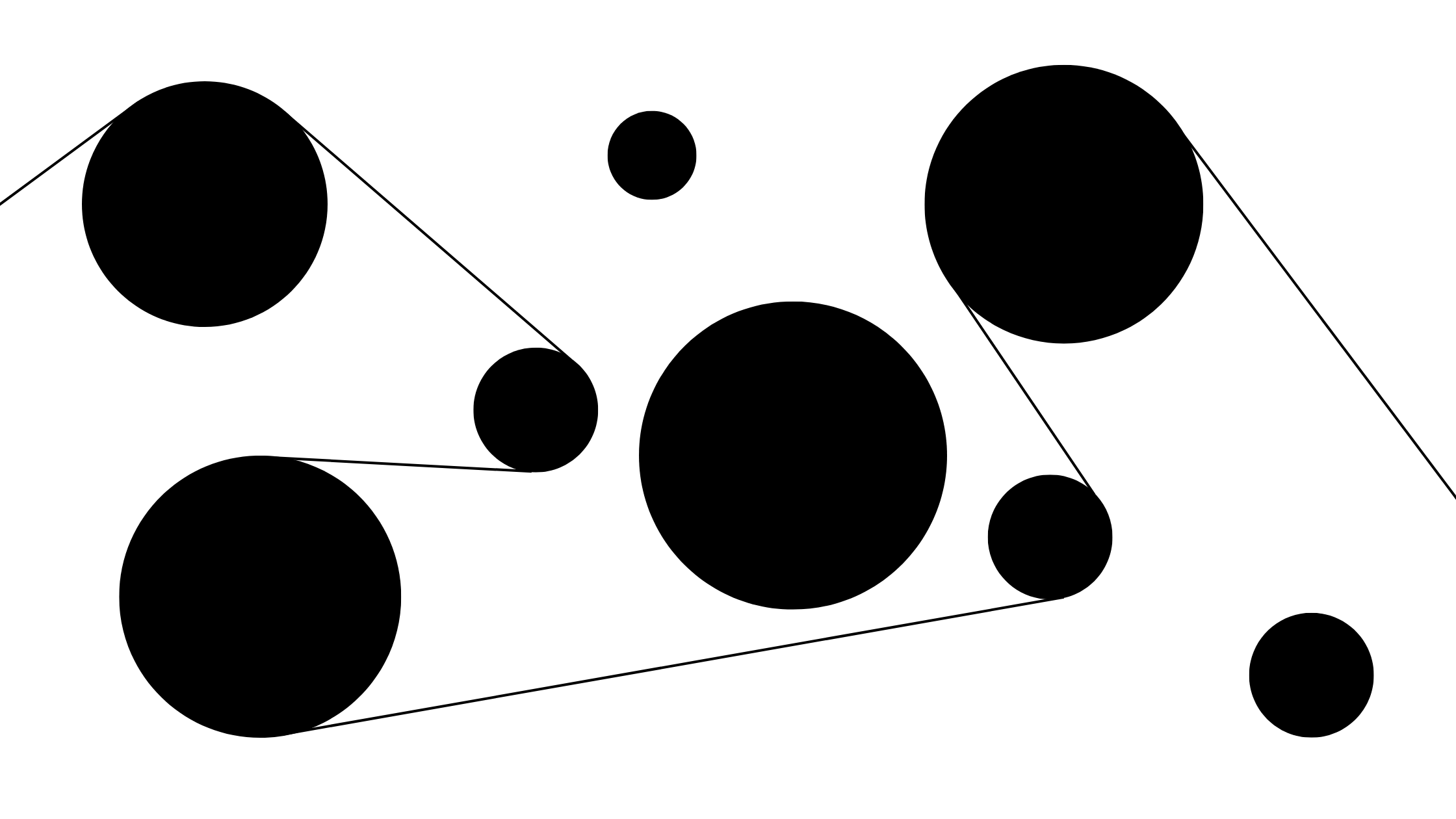
Whatever we are up to, we are working in circles, and the only way to move ahead is that question which will get us out of this infinite loop and put us on the tangent which will lead us to where we wish/aspire to be.
The more questions we ask, the more answers we get.
The more answers we have, the better questions we ask.
The better questions we ask, the more we learn.
The more we learn, the more we grow.
It all starts with a question, and all you have to do is, ASK!